The ProLine door-type pass-through dishwasher is a high-temperature machine built for a steady stream of racks in a busy kitchen. A lift-up hood door lets a dish operator slide a rack in from an inlet table and out to a clean table, cycling in about a minute. Higher throughput and a straight or corner layout make it the standard choice for restaurants that wash continuously through service.
Build and construction
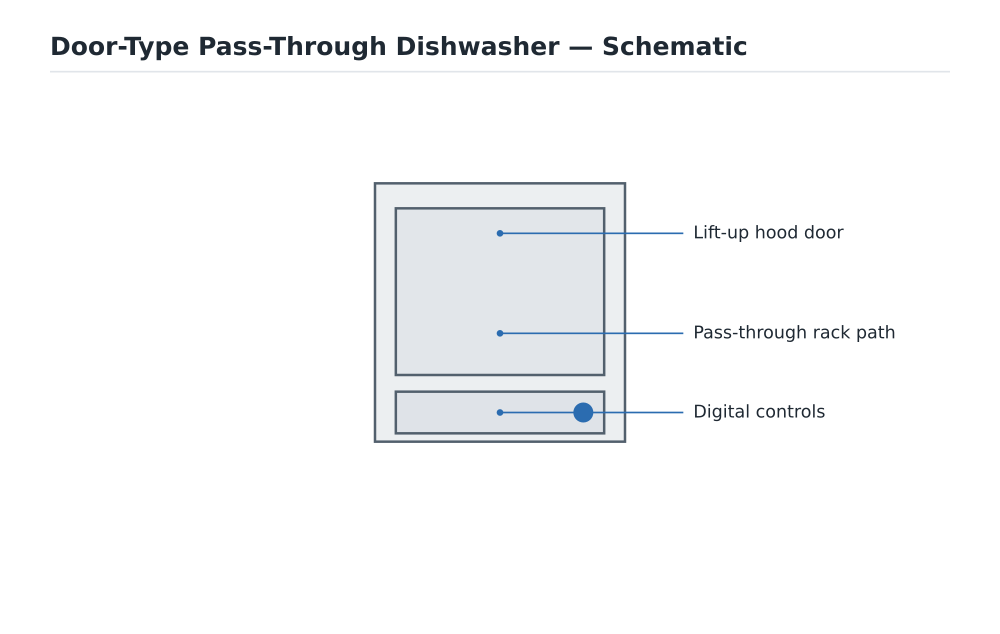
The hood and chamber are stainless steel, and the wash and rinse arms clear easily for cleaning. A standard rack passes through on inlet and outlet tables, and the machine cycles when the hood is lowered, with a booster that lifts the final rinse to sanitizing temperature. Digital controls show cycle status and temperatures, and the pass-through layout keeps dirty and clean sides separated for a clean dish workflow.
The wash and rinse arms unclip by hand, and the scrap screen lifts out so the chamber can be rinsed at close without tools. The hood counterbalances so it stays up on its own, and the pass-through path is designed to pair with standard soiled and clean dish tables.
Specifications
| Specification | Detail |
|---|---|
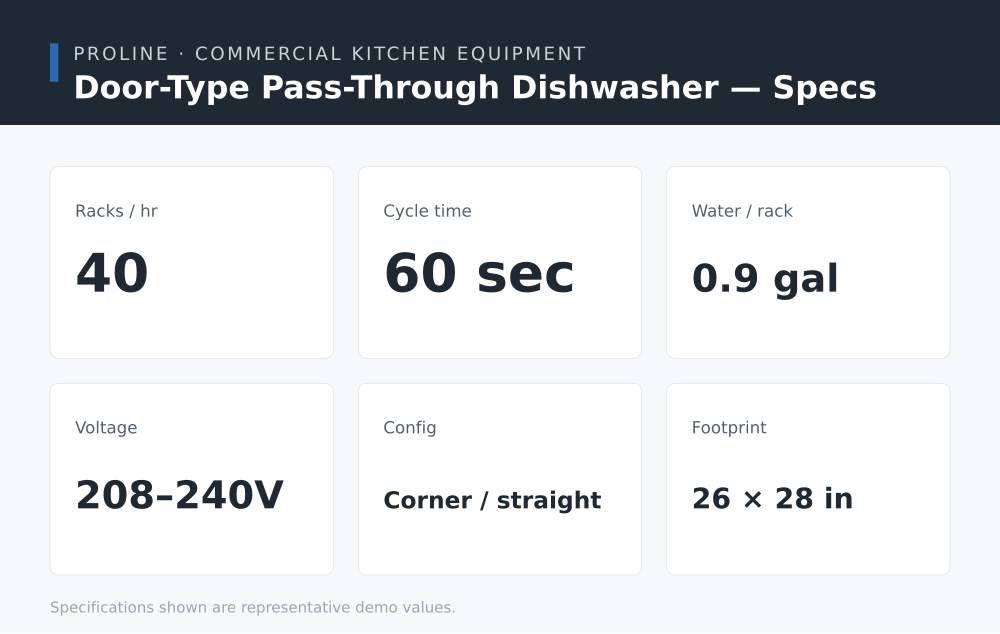
| Racks per hour | 40 |
| Cycle time | 60 sec |
| Water per rack | 0.9 gal |
| Wash / rinse | Hot with booster to sanitizing temp |
| Voltage | 208–240V |
| Configuration | Straight or corner pass-through |
| Construction | Stainless hood and chamber |
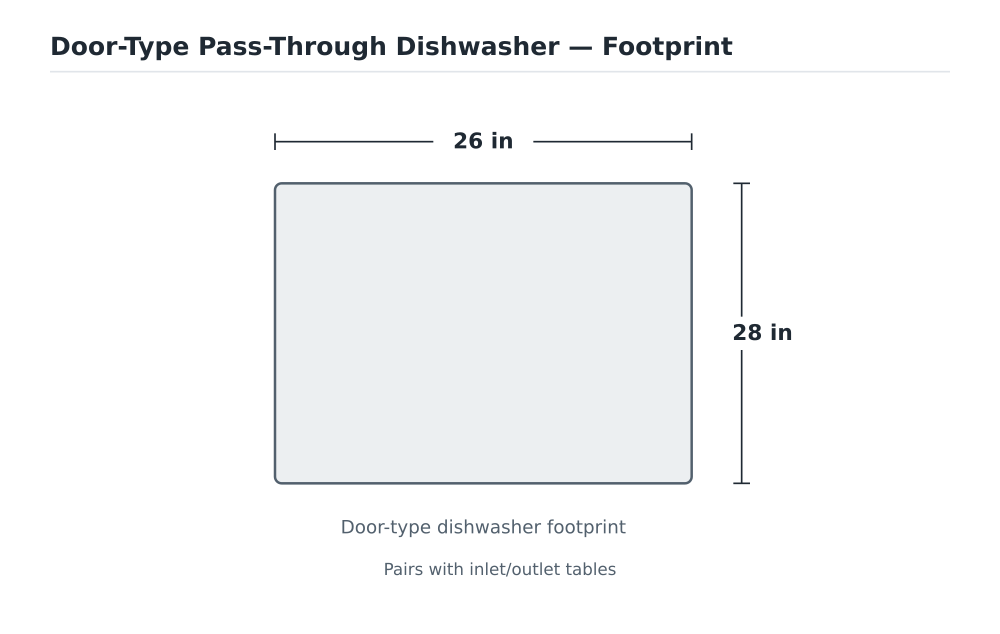
| Footprint | 26 × 28 in |
Throughput and water use
Forty racks an hour keeps up with a restaurant that washes continuously through a full service, and the pass-through hood lets one operator move racks quickly between soiled and clean tables. Water use stays under a gallon per rack despite the higher volume. For a bar or small kitchen that washes only in pockets, an undercounter machine is the lighter option; for a steady dish stream, the pass-through hood is the workhorse.
A pass-through machine is the right call for a restaurant with a dedicated dish pit and a steady flow of racks through service. Separating the soiled and clean sides keeps the workflow one-directional, which protects clean dishware and lets a single operator keep pace with a full dining room during a rush. Sizing the machine to the real rack volume matters here: an undersized washer bottlenecks the pit, while an oversized one wastes water and energy, so matching throughput to the room is the decision that counts.
Installation and requirements
- Requires a hot-water supply, a floor or table drain, and matching inlet/outlet tables.
- Runs on a 208–240V circuit; confirm booster and phase requirements.
- Allow room for the hood to lift fully and for racks to pass through.
- Descale on a regular schedule in hard-water areas.
Daily care is quick: pull the scrap screen, rinse the chamber, and leave the hood up to air out overnight. In hard-water areas a regular descale keeps the arms clear and the rinse effective. A machine kept on this routine sanitizes reliably and avoids the spotting and film that come from scale build-up.
For a kitchen that washes a continuous stream of racks, the door-type pass-through machine is the dependable choice. It cycles in about a minute, separates dirty and clean sides for a clean workflow, and pairs with inlet and outlet tables to keep a busy dish pit moving.
Part of our range: Commercial Warewashing.