Commercial freezing is the quiet backbone of a kitchen’s frozen storage — the hard-frozen stock a line draws from, and the equipment that protects product between deliveries and service. Choosing a reach-in freezer comes down to a few practical questions: how much frozen product you hold on a normal cycle, how solidly the cabinet stays below freezing as doors open through a rush, how it fits the line, and what utilities it needs. This guide walks through each of those, then lays out a simple way to size freezing to your kitchen rather than to a spec sheet. A freezer also runs continuously and works harder than a refrigerator to hold its deep temperature band, so a cabinet that is slightly too small or poorly sealed quietly costs energy and risks product every shift it is in service — which makes it worth a little extra thought up front rather than a rushed decision at the end of an equipment list.
Start with the numbers that matter
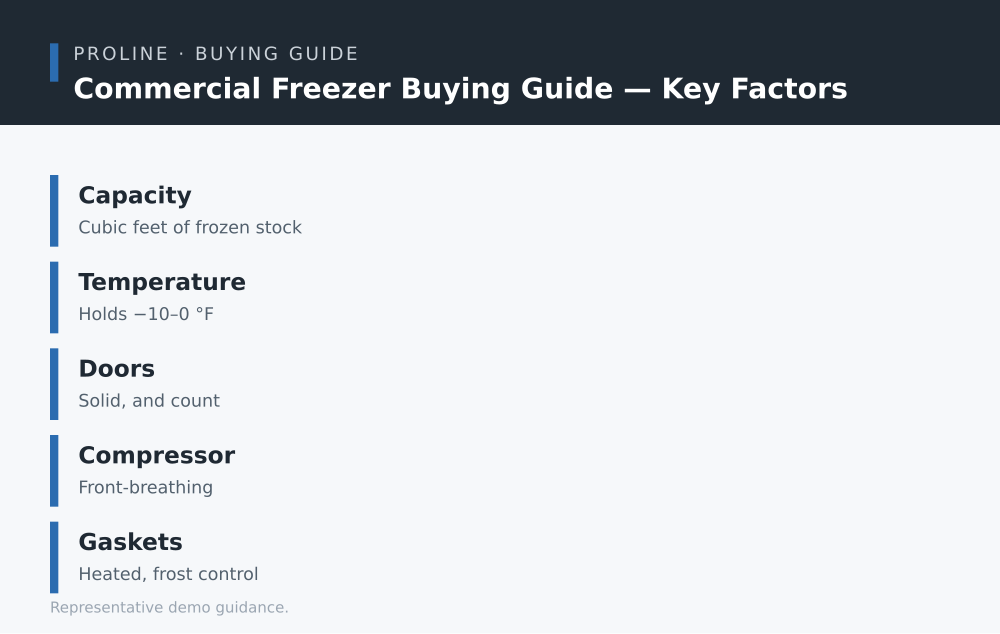
The first number is capacity, measured in cubic feet. Match it to a full stock cycle of frozen product plus a margin, so a busy service never runs the cabinet empty or forces an early reorder. A one-door cabinet holds roughly enough for a small line; two doors suit a mid-size kitchen; three doors serve high volume. The second number is temperature range and stability: a good reach-in freezer holds a solid band around minus ten to zero degrees even as doors open repeatedly, which keeps product hard-frozen and protects both texture and safety. The third consideration is the shelving and interior layout — adjustable shelves that take full-size sheet pans, hotel pans, and tall containers make the same cubic footage far more usable. Getting capacity, temperature stability, and interior layout right up front is most of the decision, and much easier than discovering a cabinet is too small or not cold enough once it is stocked and running.
Match it to your kitchen
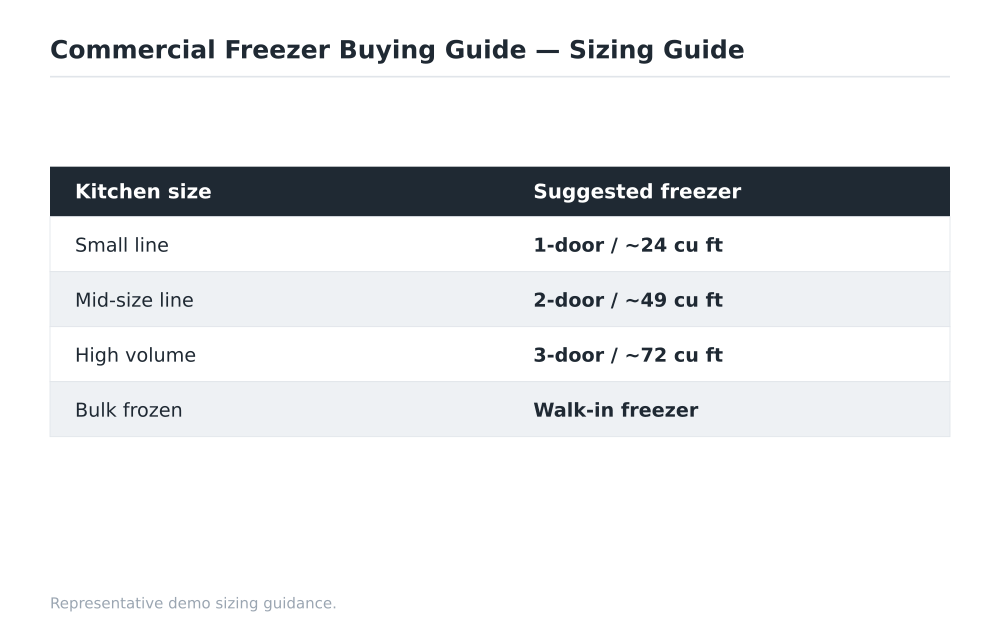
Once you know the capacity you need, match the whole cabinet to the kitchen. A small line with a focused menu is usually well served by a single-door reach-in freezer near the station that uses it. A mid-size full-service kitchen typically wants a two-door cabinet that holds a full stock cycle of frozen product. High-volume operations move to three-door cabinets or begin to weigh a walk-in freezer for bulk frozen storage. Because freezers work harder than refrigerators, confirming the door count you truly need — rather than over-buying capacity that runs half-empty — keeps energy use in check. The table above is a starting point, not a rule — a scratch kitchen and a heat-and-serve operation of the same size freeze very differently — but sizing to your busiest realistic cycle, with headroom for deliveries, keeps service smooth. Think through a normal frozen inventory and where each item lives before you settle on door count.
Weigh the main trade-off
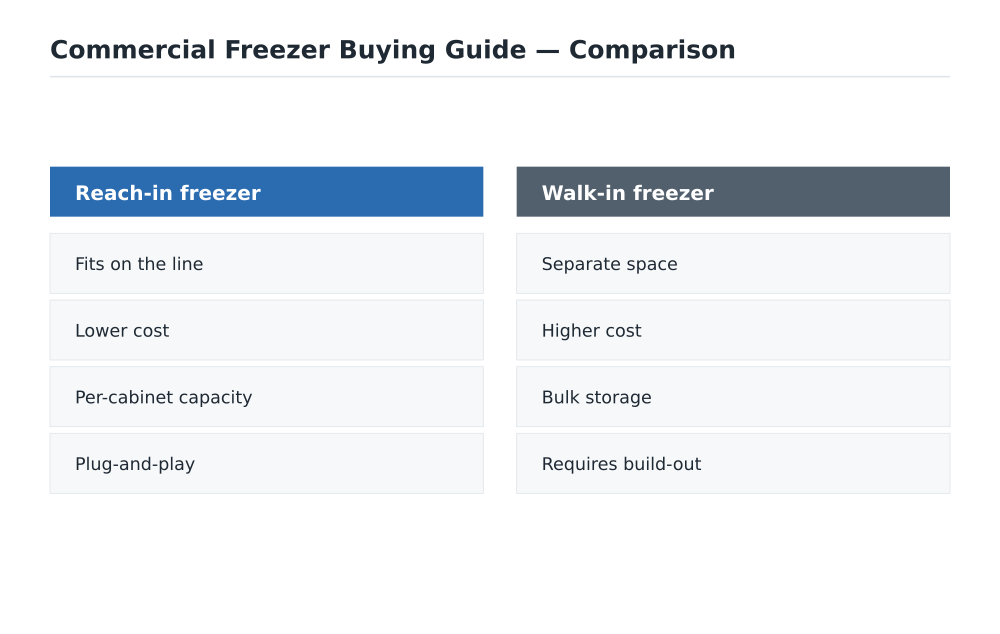
As frozen capacity needs grow, the main either-or becomes reach-in versus walk-in. Reach-in freezers fit on or just off the line, cost less up front, install by plugging in, and put frozen storage exactly where cooks need it — but each cabinet holds a fixed, per-unit amount. A walk-in freezer stores far more in bulk and suits operations that receive large frozen deliveries, but it costs more, needs a dedicated space or build-out, and puts storage a few steps off the line. Many kitchens run both: reach-ins on the line for daily use and a walk-in in back for bulk frozen stock. Neither is universally better; the right choice follows from how much you freeze, how often you receive product, and the space you can give it. The comparison above summarizes where each tends to win so you can weigh it against how your kitchen actually operates.
Plan installation and utilities
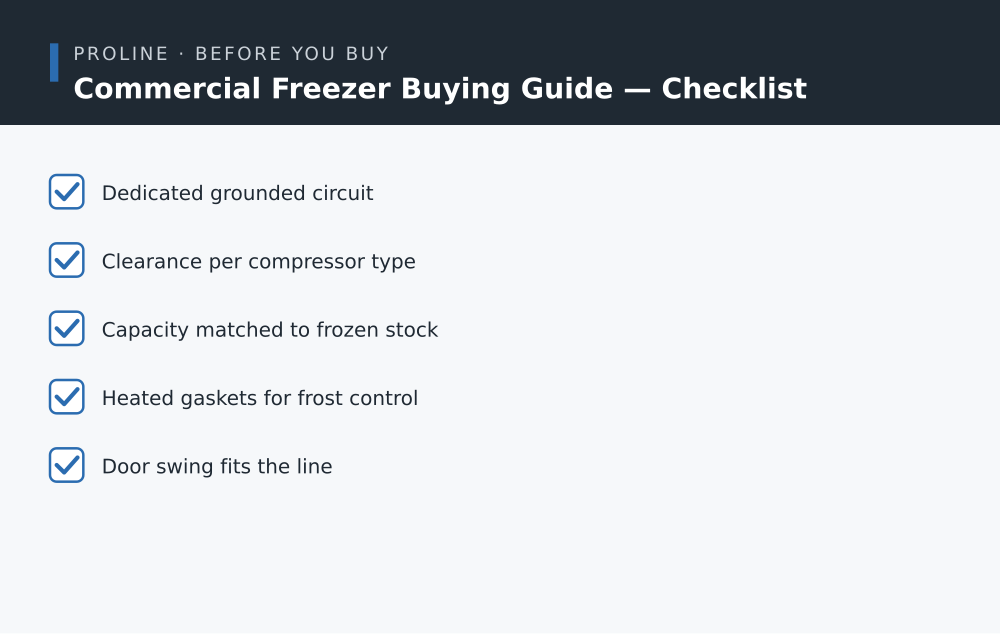
Freezing is mostly about power, airflow, and seals, so plan all three before ordering. Each cabinet needs a dedicated grounded circuit at the correct voltage; sharing a circuit risks nuisance trips and compressor strain. A front-breathing compressor lets a cabinet sit flush with zero side or rear clearance, which matters in a tight line — confirm the breathing direction so clearance is left in the right place. Because a freezer runs so cold, its door gaskets are heated to resist frost; check that seals stay clean and intact, since a worn gasket lets in warm, moist air that builds frost and drives temperature creep. Level the cabinet so doors self-close, and plan a regular condenser-cleaning schedule from day one, since clear airflow is the single biggest factor in holding a freezer’s rated temperature. The checklist above captures the items worth confirming before a cabinet is delivered.
How to decide
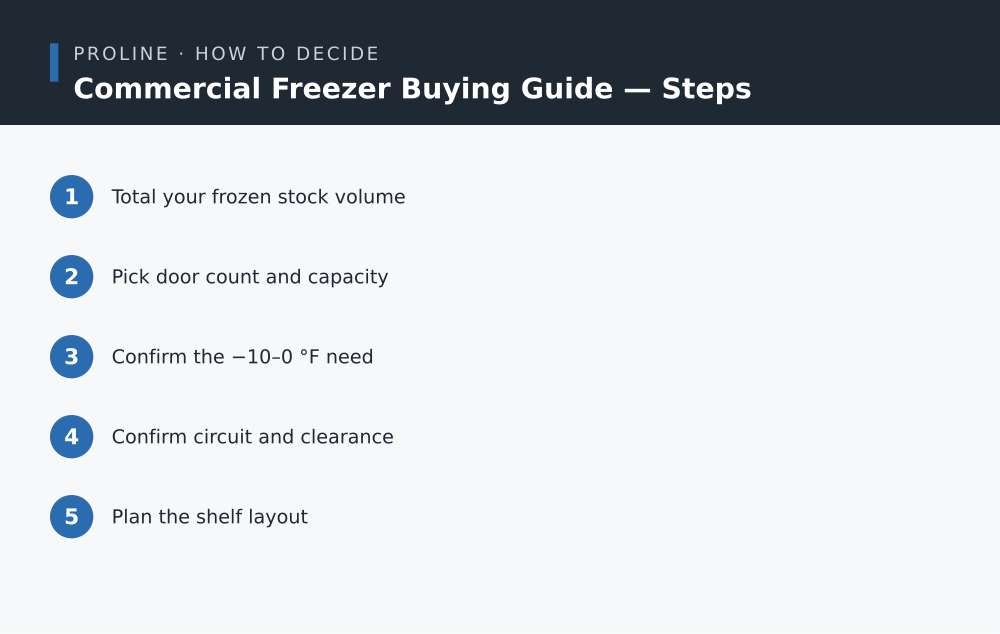
Putting it together, a simple sequence keeps the decision grounded. First, total your frozen stock cycle and add a margin for deliveries — that sets your capacity. Second, pick the door count and cubic feet that hold it, with headroom rather than exactly at your peak. Third, confirm the cabinet truly holds the minus ten to zero degree band your product needs. Fourth, confirm the dedicated circuit and the clearance the compressor design requires. Fifth, plan the shelf layout for the pans and containers you actually use. Work through those five steps and you will have sized freezing to the kitchen you run, not to a spec sheet — which is the difference between frozen storage that quietly protects your product and a cabinet you are constantly working around.
Common mistakes to avoid
A few mistakes come up again and again. The first is sizing to today rather than to a full stock cycle plus deliveries: a freezer that is full the moment product arrives leaves nowhere to put the next order. The second is sharing a circuit — a freezer works harder than a refrigerator and wants its own dedicated grounded line, not one shared with other equipment. The third is ignoring the compressor’s breathing direction and leaving clearance in the wrong place, so a front-breathing unit boxed in runs hot and struggles to hold temperature. The fourth is neglecting the heated door gaskets: a worn or dirty seal lets warm, moist air in, which builds frost, drives temperature creep, and shortens the compressor’s life. The fifth is skipping the condenser-cleaning schedule from day one, since clear airflow is what lets a freezer hold its deep temperature band. None of these are exotic; they are the predictable result of buying from a spec sheet rather than from an honest look at how much the kitchen freezes and how the cabinet will actually sit in the line.
Related equipment
If you are ready to look at specific freezing, these pages cover a common configuration and the full category:
- 2-Door Reach-In Freezer
- Commercial Refrigeration Equipment
Choosing a freezer well is mostly a matter of sizing capacity honestly to your frozen cycle and confirming power, airflow, and seals before it arrives. Get those right and the rest — door count, shelving, reach-in versus walk-in — falls into place around them. Use the sizing and checklist above as a starting point, and match the equipment to the kitchen you are actually running. A short conversation with a refrigeration supplier about your real frozen volume is time well spent before you commit.