Gas versus electric is the first fork most kitchens hit when buying a range, and it shapes cost, cooking, and installation for the life of the equipment. Neither is simply better; each suits a different menu, a different set of utility costs, and a different space. Gas gives an instant, visible flame that cooks respond to by feel; electric holds a steady, even heat that favors baking and precise temperature. This guide lays out how the two actually differ, where each tends to win, and a simple way to choose the one that fits the kitchen you are building rather than the one you are used to. It is a decision worth making deliberately rather than by default, because a range is a long-lived, heavily used piece of equipment, and the fuel it runs on touches every service for a decade. The good news is that the choice is far less about brand or price than about a few concrete facts — your menu, your utility rates, and what the building can supply — all of which you can pin down before you ever look at a specific model.
How the two actually differ
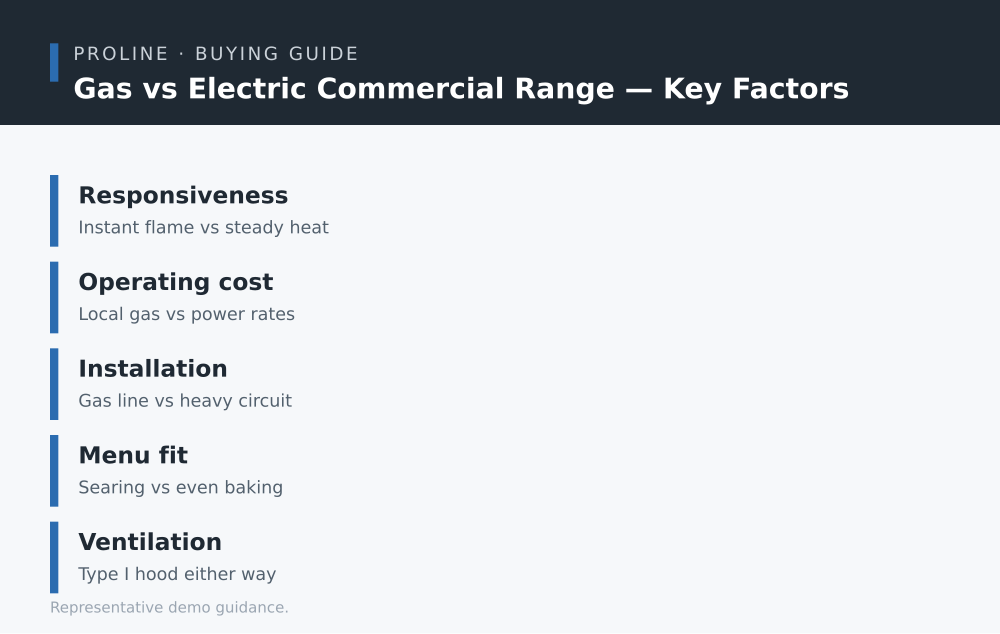
The core difference is how heat is made and controlled. A gas burner produces an open flame that responds the instant a cook turns the valve, which is why line cooks favor gas for searing, sautéing, flashing a pan, and wok work where visible, immediate control matters. An electric range or oven heats an element or surface that warms and cools more slowly but holds a very even, stable temperature, which favors baking, roasting, and anything that rewards consistency over quick response. Beyond feel, the two differ in the utilities they demand: gas needs a properly sized gas line and always a Type I hood, while electric needs the right voltage and often three-phase power. They also age differently — gas burners are simple and cheap to service, while electric elements are clean but cost more to replace. Understanding these differences is the foundation of the decision, because they map directly onto how a given kitchen actually cooks and what it can supply.
Where each option leans
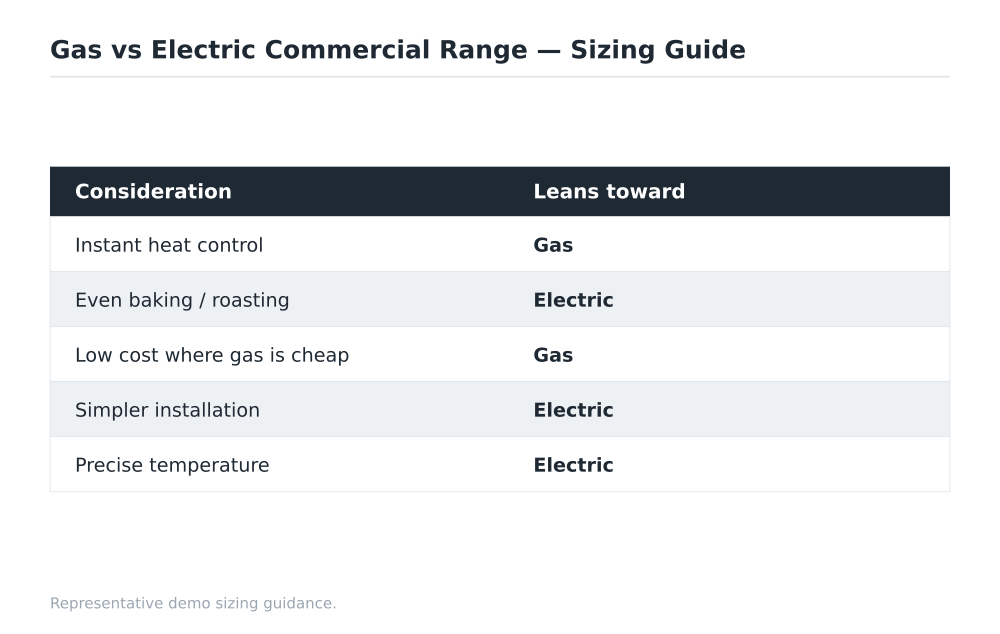
Once the differences are clear, most considerations lean fairly predictably one way or the other. If instant heat control and responsive searing matter most, gas leans ahead. If even baking and precise, repeatable temperature matter more, electric leans ahead. On operating cost, the answer is local: where natural gas is inexpensive relative to electricity, gas usually costs less to run, and where power is cheap or gas is dear, electric closes the gap. On installation, electric is often simpler where no gas line exists, while gas is straightforward where a line is already run. The table above lays these leanings out side by side, but they are tendencies, not rules — a bakery-forward café and a high-volume grill house will read the same table and land in different places. The point is to see which way your specific priorities pull before weighing them against each other.
The head-to-head
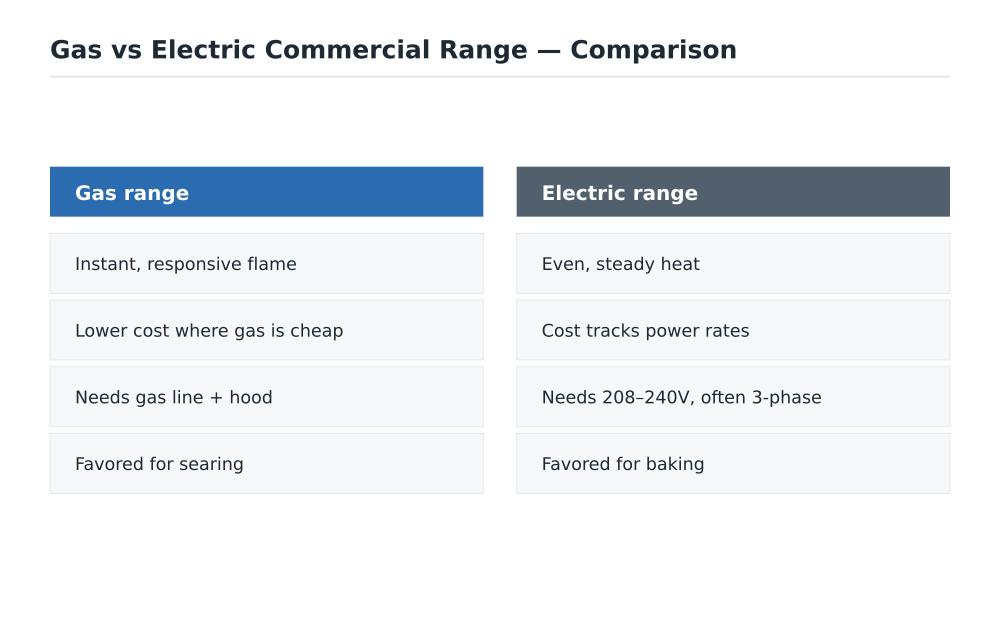
Put directly against each other, the trade-offs are easy to summarize. Gas offers an instant, responsive flame, tends to cost less where gas is cheap, and is favored for searing and high-heat cooking — at the price of needing a gas line and a hood, and delivering less even oven heat. Electric offers steady, even temperature ideal for baking and roasting and installs without a gas connection — at the price of needing heavy electrical service, often three-phase, and responding more slowly to a cook’s adjustments. Many kitchens refuse to choose and split the difference: gas burners on top for responsive cooking and an electric convection oven below or alongside for even baking. The comparison above frames the head-to-head so you can weigh each row against how your kitchen actually cooks, rather than treating either fuel as universally superior.
Cost, installation, and utilities
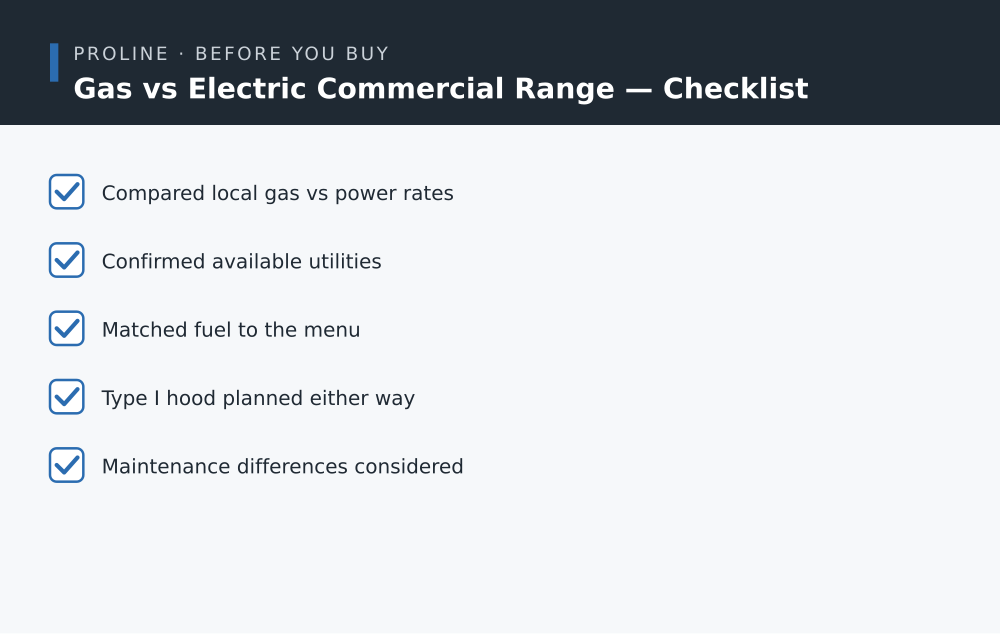
The decision is not only about cooking; it is about what the building can supply and what installation will cost. Before committing, compare your local gas and electricity rates honestly, since operating cost compounds over years of daily use. Confirm which utilities are already run to the space — adding a gas line or upgrading to three-phase power after the fact is expensive and can stall an opening. Remember that either fuel requires a Type I hood over the cooking surface with matched make-up air, so ventilation cost is common to both. Factor in maintenance too: gas burners are cheap and simple to keep running, while electric elements are tidy but cost more when they eventually fail. The checklist above captures the items worth confirming before you commit to a fuel, when the cost of changing course is still just a conversation.
How to decide
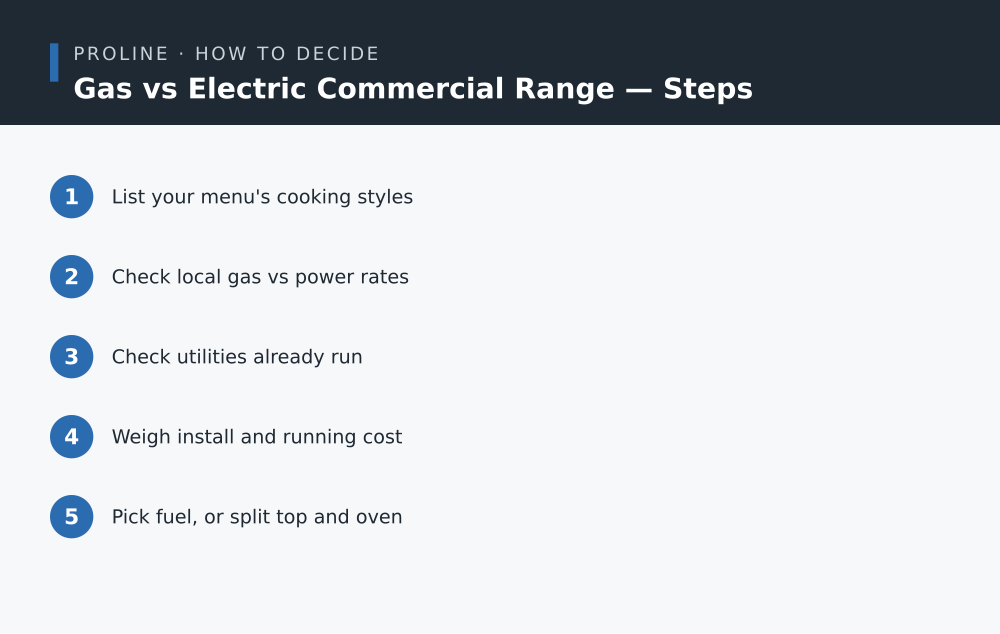
A simple sequence keeps the choice grounded. First, list the cooking styles your menu actually leans on — searing and à la minute work point toward gas, baking and roasting toward electric. Second, compare your local gas and electricity rates so operating cost is a fact, not a guess. Third, check which utilities are already run to the space and what it would cost to add the other. Fourth, weigh installation and running cost together over the equipment’s life, not just the sticker price. Fifth, if the menu genuinely wants both, consider splitting — gas top, electric oven — rather than forcing one fuel to do everything. Work through those five steps and the answer usually becomes obvious, because it follows from your menu and your building rather than from habit.
Common mistakes to avoid
A few mistakes recur. The first is choosing fuel by habit — buying gas because the last kitchen had gas — without checking whether the menu or the building actually favors it. The second is ignoring local energy prices, which can make the cheaper-to-install option the more expensive one to run over a decade. The third is forgetting that both fuels need a Type I hood, and budgeting ventilation for only one. The fourth is discovering too late that the space has no gas line, or lacks three-phase power, after the range is already ordered — a costly surprise that a single utility check would have caught. The fifth is treating the oven as an afterthought: a kitchen that bakes heavily but buys a gas range for its burners may end up fighting an uneven oven every day. None of these are exotic; they come from deciding on reputation or reflex instead of on the menu, the utility bill, and what the building can actually supply.
Related equipment
If you have settled on a direction, these pages cover a representative range and the full category:
- 6-Burner Commercial Gas Range
- Commercial Cooking Ranges
The gas-versus-electric choice comes down to how your kitchen cooks, what your utilities cost, and what the building can supply — not to which fuel has the better reputation. Weigh those honestly and the answer usually follows on its own, and splitting the difference with a gas top and electric oven is always on the table. A short conversation with an equipment supplier about your menu and utilities is time well spent before you commit. Either way, the goal is a range whose fuel matches how the kitchen actually cooks and what the building can actually supply, so it quietly does its job for years.