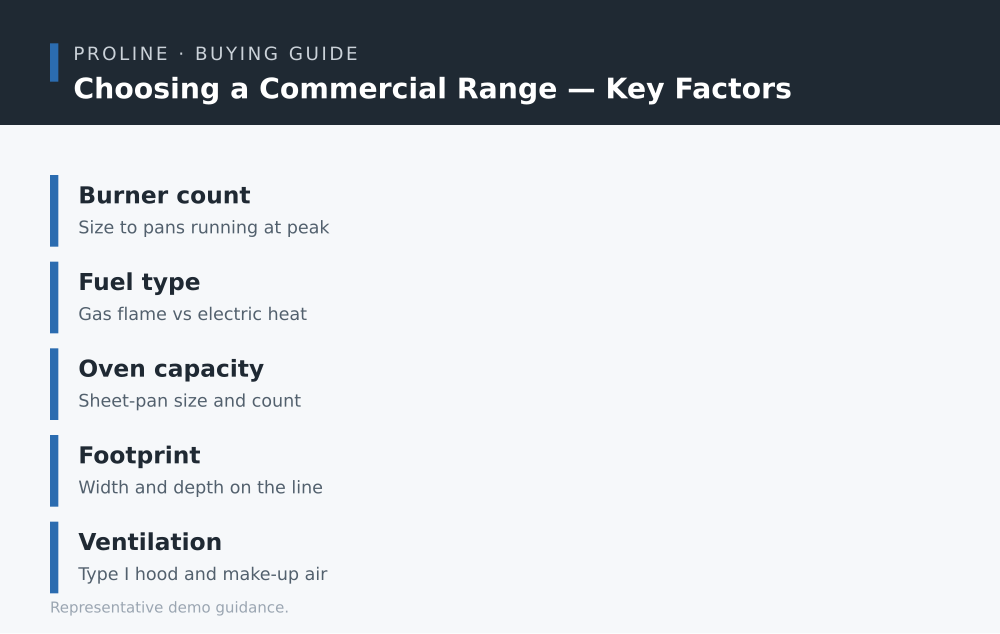
A commercial range is usually the most-used piece of equipment on a hot line, so choosing the right one shapes how smoothly a kitchen runs for years. The decision comes down to a handful of practical questions: how many pans fire at once during your busiest service, whether gas or electric suits your menu and utilities, how much oven capacity you need below the burners, and how much floor space and ventilation you can give it. This guide walks through each of those in turn, then lays out a simple way to size a range to your kitchen rather than to a spec sheet.
Start with the numbers that matter
The first number is burner count. Size it to how many pans actually run at once when the line is slammed, not to the average — a range that keeps a cook waiting for a free burner will bottleneck every ticket behind it. Four burners cover most café and small-restaurant menus; six suit a busy full-service line where several dishes fire to order together. The second number is oven capacity below the burners: confirm it holds full-size sheet pans and reaches roasting temperature quickly, since the oven often doubles as a second bake or hold space during prep. Finally, think about heat output. Higher BTU per burner means faster recovery when a cold pan hits the flame, which matters most in kitchens that sear and boil continuously. Getting these three numbers right — burners, oven, and output — is most of the decision, and it is far cheaper to size up front than to discover mid-service that the range cannot keep pace with the room it was bought for.
Match it to your kitchen
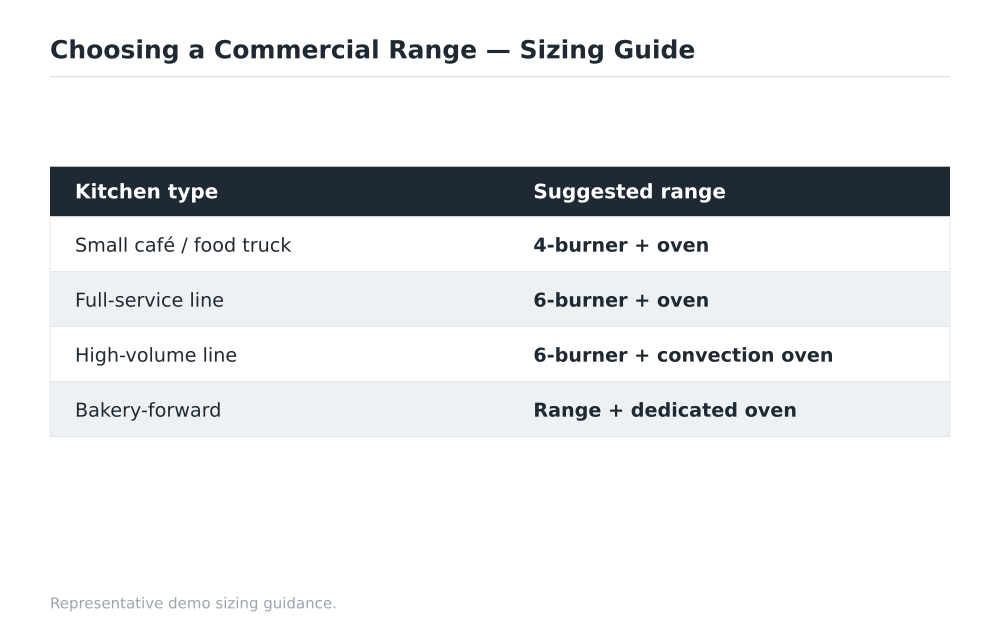
Once you know the burner count you need, match the whole range to the type of kitchen you are running. A food truck or small café that cooks a focused menu is usually well served by a four-burner range with a standard oven, which delivers real commercial output without dominating a tight cook space. A full-service line that fires several dishes to order at once will back up behind anything smaller than a six-burner. High-volume kitchens, or those that bake in quantity, often pair a range with a dedicated convection oven so the burners stay free for à la minute cooking while the oven handles volume baking. The table above is a starting point, not a rule — a barbecue joint and a breakfast diner of the same size cook very differently — but sizing to your busiest realistic service, with a little headroom, keeps the line moving. It is worth mapping a peak ticket in your head and counting the pans it would put on the range at once.
Weigh the main trade-off
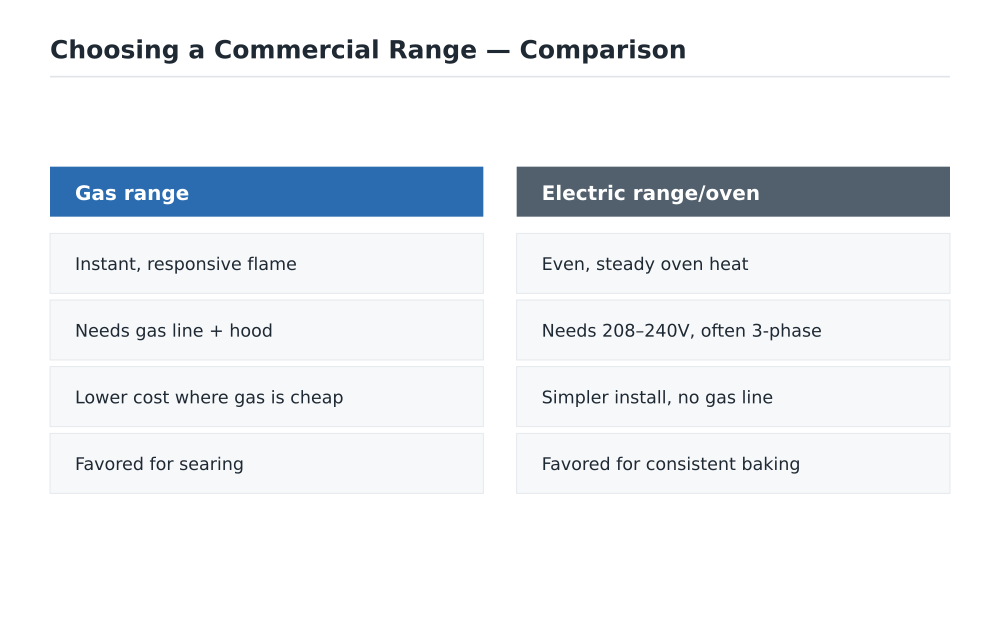
The biggest either-or in range selection is gas versus electric. Gas gives an instant, visible, highly responsive flame that most line cooks prefer for searing, sautéing, and wok work, and where natural gas is inexpensive it usually costs less to run. The trade-off is that gas needs a properly sized gas line and always a Type I hood over the cooking surface. Electric ranges and electric convection ovens, by contrast, hold a very even, steady temperature that favors consistent baking and roasting, and they install without a gas connection — though they need the right voltage and often three-phase power. Many kitchens end up with both: gas burners on the line for responsive cooking and an electric convection oven for even baking. There is no universally correct answer; the right choice follows from your menu, your local energy costs, and the utilities already run to the space. The comparison above summarizes where each option tends to win so you can weigh it against how your kitchen actually cooks.
Plan installation and utilities
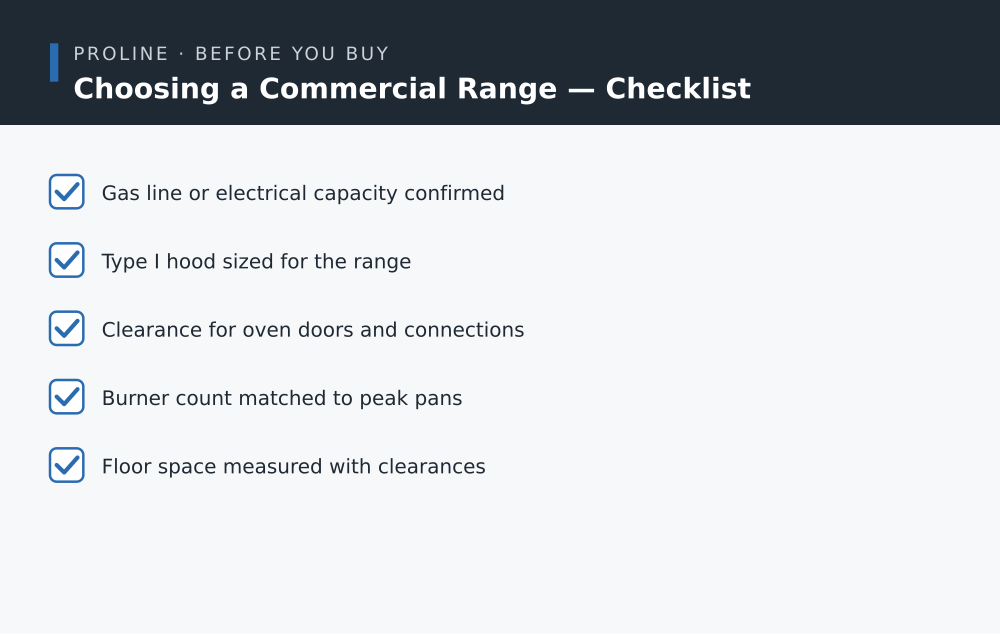
A range is only as good as the utilities feeding it and the ventilation carrying heat and grease away, so plan those before you order. Every commercial cooking line sits under a Type I exhaust hood, and that hood needs matched make-up air to replace what it pulls out — undersized ventilation is one of the most common and expensive things to discover after installation. Gas models need a dedicated line sized for the full burner-and-oven load; electric models need the correct voltage and phase confirmed with an electrician. Leave clearance for gas connections behind the unit and for the oven door to open fully in front. Finally, measure the real footprint including those clearances, and level the range on its adjustable legs so the oven door closes on its own and pans sit flat on the burners. The checklist above captures the items worth confirming before a range is delivered, when changes are still cheap and easy to make.
How to decide
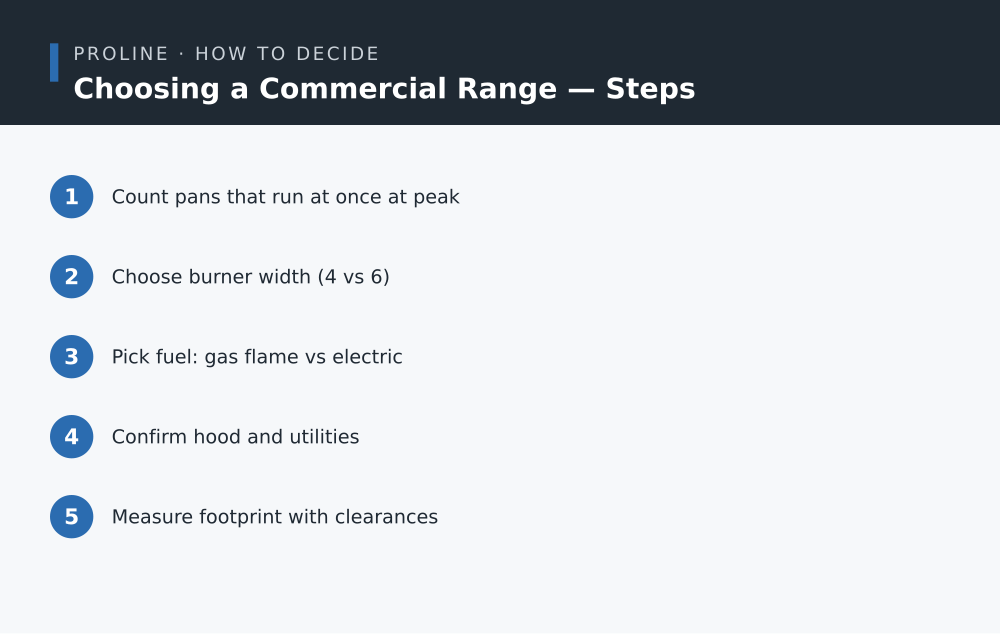
Putting it together, a simple sequence keeps the decision grounded. First, count the pans that run at once during your busiest realistic service — that sets your burner count. Second, choose the width, four or six burners, with a little headroom rather than exactly at your peak. Third, pick the fuel: gas for a responsive flame, electric where even baking and a simpler install matter more. Fourth, confirm the hood, make-up air, and the gas or electrical supply with the people who will install them. Fifth, measure the footprint with all clearances so the range fits the line and the door opens freely. Work through those five steps and you will have sized a range to the kitchen you actually run, not to a spec sheet — which is the difference between equipment that quietly does its job for years and equipment you fight with every shift.
Common mistakes to avoid
A few mistakes come up again and again. The first is sizing to the average shift instead of the peak: a range that keeps up on a quiet afternoon but backs up every Friday night was under-bought, and adding burners later is far more expensive than buying them now. The second is treating ventilation as an afterthought — ordering the range, then discovering the hood is too small or that no make-up air was planned, which can stall an opening for weeks. The third is ignoring clearances: a range that technically fits the wall space but leaves no room for the oven door to open, or no access to the gas connection, creates daily friction. The fourth is over-indexing on brand or price while overlooking the oven below the burners, which many kitchens rely on as heavily as the cooktop. The fifth is skipping the leveling step at install, so the oven door drifts open and pans sit at an angle. None of these are exotic; they are the predictable result of buying from a spec sheet rather than from an honest look at the busiest service the range has to survive.
Related equipment
If you are ready to look at specific ranges and ovens, these pages cover the common configurations and the full category:
- 6-Burner Commercial Gas Range
- Commercial Cooking Ranges
Choosing a range well is mostly a matter of sizing it honestly to your busiest service and confirming the utilities and ventilation before it arrives. Get those right and the rest — fuel type, oven capacity, footprint — falls into place around them. Use the sizing and checklist above as a starting point, and match the equipment to the line you are actually building.