Griddles and charbroilers both cook over direct heat, but they produce very different food. A griddle’s solid flat plate gives an even sear with no char, while a charbroiler’s open grates deliver the marks and smoky flavor of grilling. The choice is really about what your menu cooks and whether char flavor matters to it. This comparison walks through how the two differ, puts them head to head, and lays out when each one is the right call so you can match the surface to the food you actually make. Getting this right matters because the surface shapes the menu as much as the menu shapes the surface, and the two cook such different food that choosing wrong means fighting your equipment every service.
How they differ
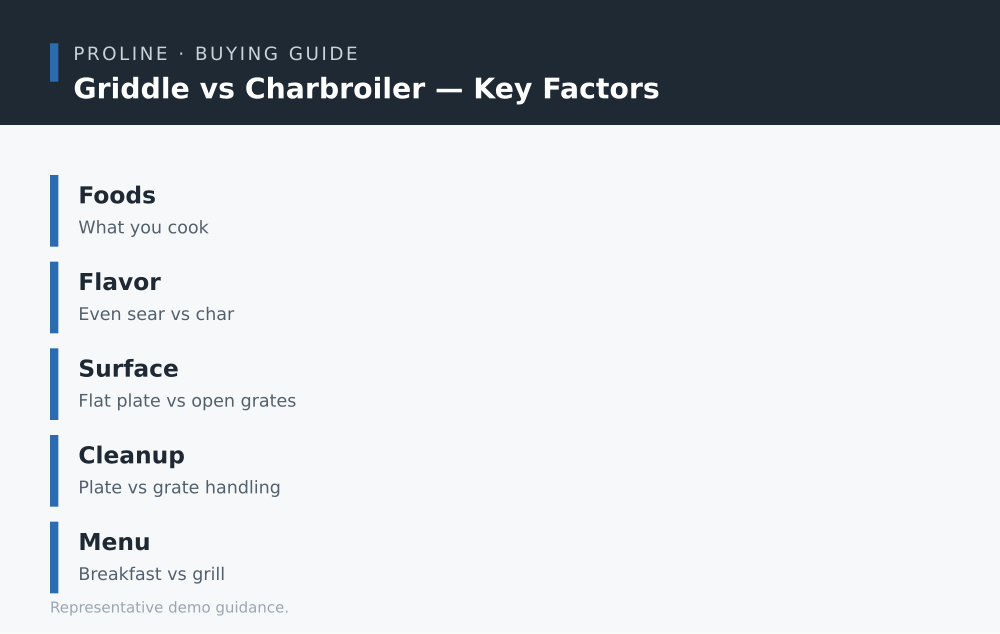
The core difference is the cooking surface and the flavor it produces. A griddle is a solid, thick steel plate heated from below, giving a large, even surface ideal for eggs, pancakes, smash burgers, and anything that benefits from full contact with hot metal. A charbroiler cooks food on open grates above a radiant or lava-rock heat source, so fat drips away and the direct flame and grates create char marks and a smoky, grilled character. The griddle wins on versatility for flat-cooked breakfast and sandwich items and on easy, contained cleanup; the charbroiler wins on the distinct flavor and appearance of grilled food. The decision rarely turns on which cooks faster and almost always on the food itself — whether your menu wants the even sear of a flat top or the char and smoke of a grill.
Head to head
Put side by side, the trade-offs are clear. The griddle offers a versatile flat surface and simple scrape-and-trough cleanup, at the cost of no char flavor. The charbroiler offers grill marks and smoky character, at the cost of messier grate-and-grease cleanup and a narrower set of foods. The table below summarizes the head-to-head so you can weigh flavor and food type against cleanup and versatility directly. It is worth noting that the two are not really competitors so much as answers to different foods: a breakfast line built around a charbroiler would struggle with eggs and pancakes, while a steakhouse relying on a flat griddle would lose the char its menu is built on. Reading the table with your own signature items in mind, rather than in the abstract, is what turns it into a decision — and often reveals that a busy line wants both.
| Feature | Flat-top griddle | Charbroiler |
|---|---|---|
| Surface | Solid flat plate | Open grates over heat |
| Signature foods | Eggs, pancakes, smash burgers | Steaks, char-marked items |
| Flavor | Even sear, no char | Char, smoke, grill marks |
| Cleanup | Scrape plate and trough | Grates and grease management |
| Best for | Breakfast and burger lines | Grilled proteins to order |
When to choose each
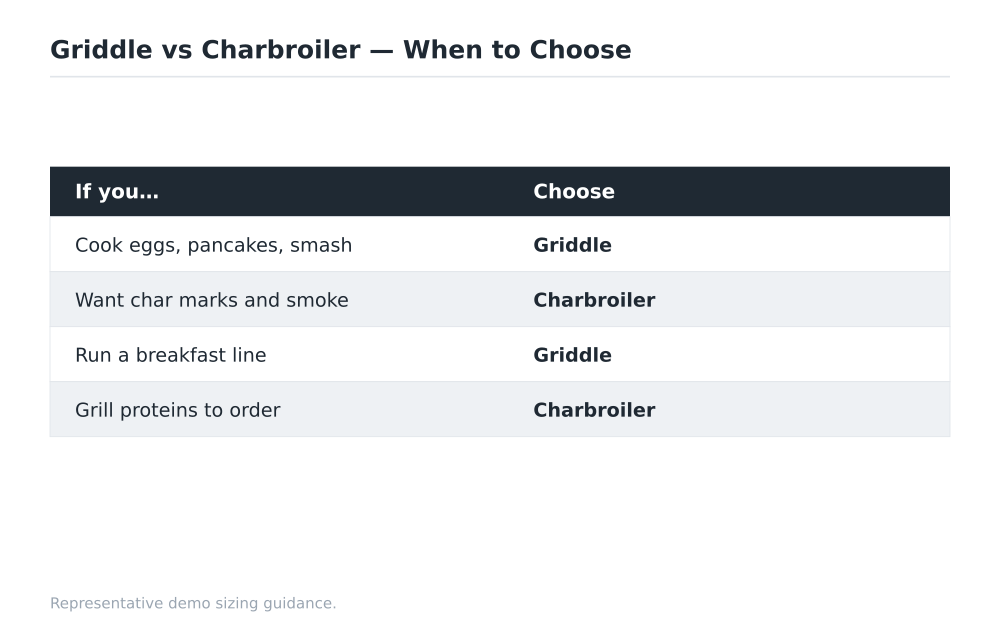
Choosing between them comes down to the menu. If you run a breakfast line, a burger station, or anything built on eggs, pancakes, and smash-style cooking, a griddle is the natural fit — its flat surface handles those items in volume and cleans up quickly. If your menu leans on grilled steaks, chops, or char-marked vegetables and sandwiches, a charbroiler produces a flavor and look a griddle simply cannot. Many busy lines run both, using the griddle for flat-cooked items and the charbroiler for grilled proteins, because the two cover different parts of a menu rather than competing. The when-to-choose guidance above maps common situations, but the underlying rule is simple — match the surface to the signature foods your menu cooks, and add the second piece if the menu genuinely spans both flat and grilled cooking.
Cost and running considerations
Cost separates the two more in operation than in purchase price, which is often comparable. The bigger differences are cleanup labor and grease handling: a charbroiler’s open grates and drip management take more time and effort to clean than a griddle’s scrape-and-trough routine, and a charbroiler is classified as heavier-duty cooking equipment, which can raise the exhaust-hood airflow it requires and therefore ventilation cost. Both belong under a Type I hood, and both need a gas line sized to their load. Consumables differ too — lava rocks or radiants on some charbroilers are replaced over time, while a griddle plate simply needs seasoning. Neither is dramatically cheaper to run; the practical question is whether the crew and ventilation can support a charbroiler’s heavier cleanup and duty. The honest comparison weighs those operating realities against the flavor and menu range each surface delivers, rather than the purchase price alone.
How to decide
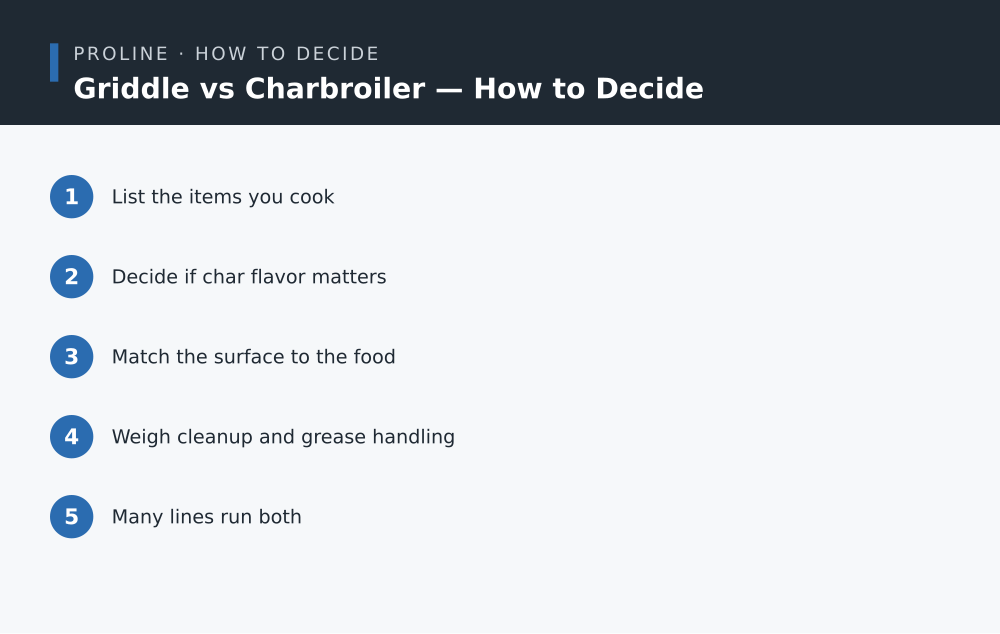
A short sequence makes the decision concrete. First, list the items your menu actually cooks over direct heat. Second, decide whether char marks and smoky flavor are important to those items or beside the point. Third, match the surface to the food — flat plate for even-seared items, open grates for grilled ones. Fourth, weigh the cleanup and grease handling each involves, since a charbroiler asks more of the crew. Fifth, recognize that many lines end up running both because the menu spans flat and grilled cooking. Work through those steps and the answer usually becomes clear, because it follows from the food on your menu rather than from a general preference for one cooking style.
Related equipment
If you have a direction in mind, these pages cover a representative griddle and the griddles category:
- 48-inch Flat-Top Gas Griddle
- Commercial Griddles & Charbroilers
Neither is better in the abstract; the griddle wins on flat-cooked versatility while the charbroiler wins on grilled flavor. Match the surface to the food your menu actually cooks, and if it spans both, running the two together is an ordinary and effective setup. A short look at your menu is the best guide before you commit. Letting the menu choose the surface, rather than the other way around, is what keeps the cook line working with you instead of against you. And because the two surfaces complement rather than replace each other, a kitchen whose menu genuinely spans flat-cooked and grilled items should not agonize over picking just one — budgeting for both from the start is often cheaper than adding the second piece and its ventilation later.