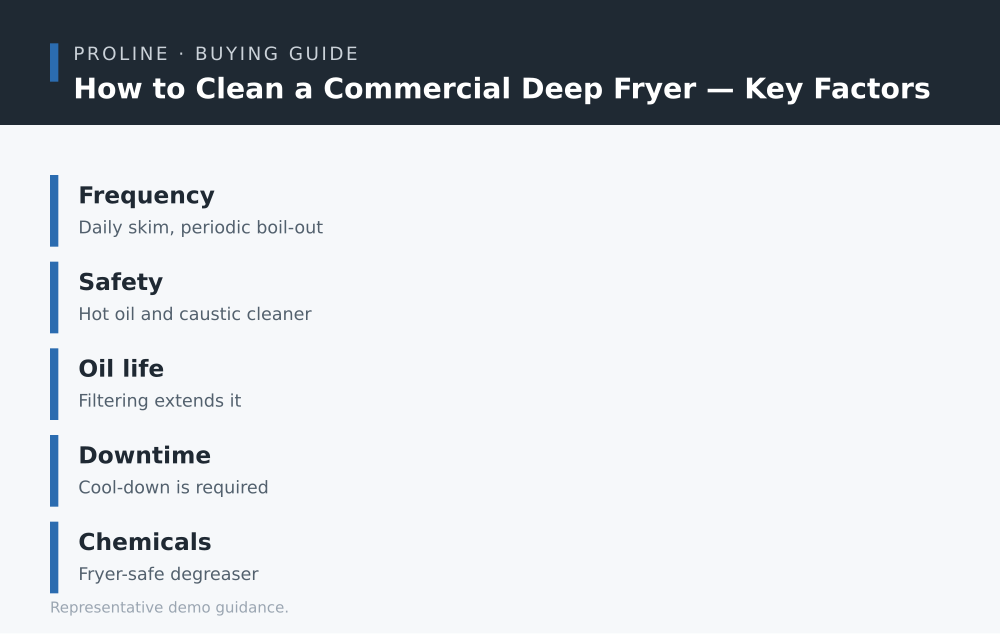
Cleaning a commercial fryer well does two jobs at once: it keeps the food tasting right and it protects a real operating expense, since clean oil lasts far longer than neglected oil. Fryer cleaning is also a genuine safety task, because it involves hot oil and, during a boil-out, caustic cleaner. This guide walks through why and how often a fryer needs attention, a simple cleaning schedule from between-batch skimming to a full boil-out, how daily care differs from a deep clean, the safety steps that matter before you start, and a clear step-by-step for the boil-out itself. Follow it and a fryer stays safe, turns out consistent food, and gets the most life out of every batch of oil. None of it is complicated, but it does reward doing the same things in the same order every time, because a fryer that is cleaned on a rhythm almost never needs an aggressive rescue, while one that is neglected eventually forces a hard, hazardous deep clean and burns through oil in the meantime. Treating cleaning as a routine rather than a reaction is what keeps both the food and the operating cost where they should be.
Why and how often
A fryer needs regular attention for three reasons: food quality, oil life, and safety. As oil is used, it picks up food particles and breaks down, which dulls flavor and darkens product, so removing debris and filtering the oil keeps output consistent. Oil is also expensive, and disciplined cleaning is the single biggest thing that extends its life — a fryer skimmed between batches and filtered daily can run oil far longer than one left to accumulate crumbs in the tank. And a clean fryer is a safer fryer: built-up debris and old oil are both fire and slip hazards. How often depends on volume, but the rhythm is consistent: skim between batches, filter and wipe daily, boil out weekly or as the oil tells you, and deep-clean whenever the oil is changed. Matching that rhythm to your actual frying is the foundation of keeping the fryer in good shape.
A cleaning schedule
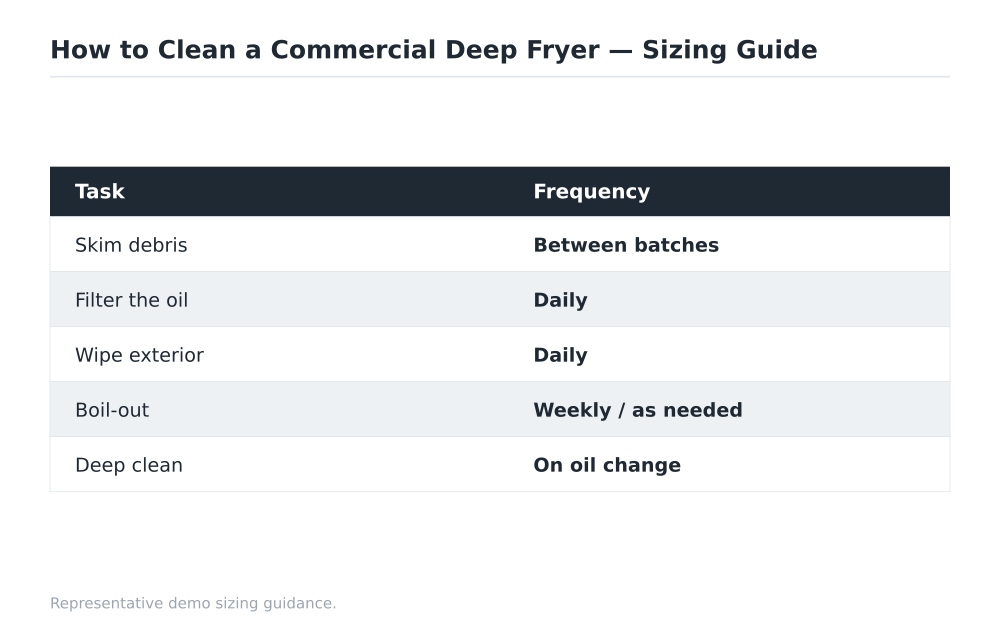
It helps to think of fryer cleaning as a schedule rather than a single chore. Between batches, skim floating debris so crumbs do not sit and burn in the oil. Once a day, filter the oil to pull out fine sediment and wipe down the exterior and surrounding surfaces. Weekly, or whenever the oil looks or smells tired, perform a boil-out to strip the tank of cooked-on residue. And whenever you change the oil, take the opportunity for a deep clean of the drained tank, elements or burner tubes, and baskets. The table above lays out this cadence. The key idea is that small, frequent tasks — skimming and filtering — do most of the work of keeping oil clean and the fryer safe, while the bigger boil-out and deep clean handle what the daily routine cannot reach. A fryer kept on this schedule rarely needs heroic cleaning.
Daily care vs deep clean
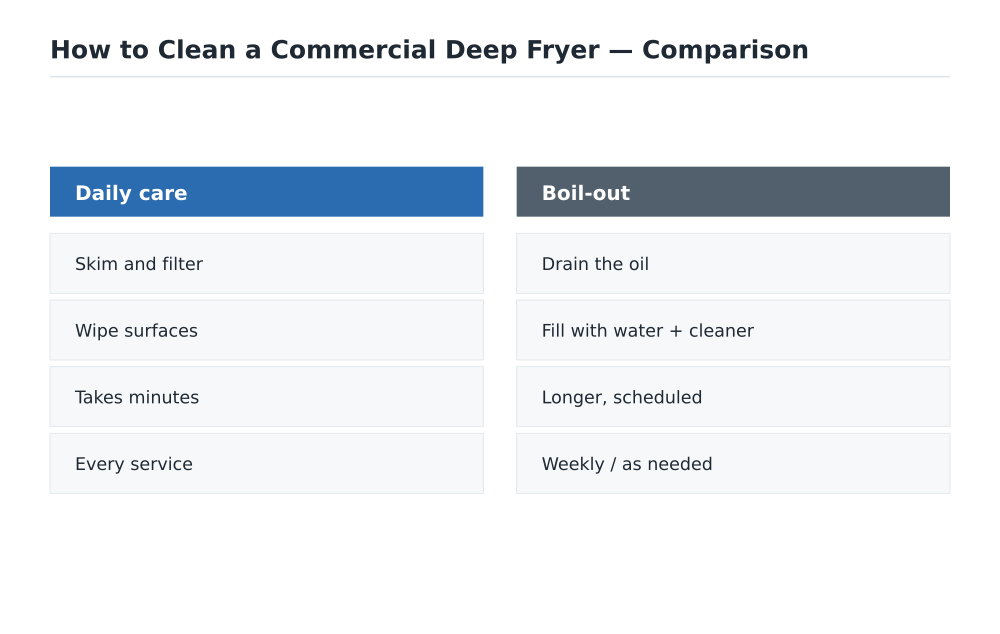
Two levels of cleaning do different jobs, and it helps to keep them distinct. Daily care is quick and happens with oil in the tank: skimming, filtering, and wiping surfaces, all measured in minutes and done every service. A boil-out is a scheduled deep clean that happens with the oil drained: the tank is filled with water and a fryer-safe cleaner, brought up to temperature to loosen cooked-on residue, then scrubbed, drained, and thoroughly rinsed and dried before fresh oil goes back in. The comparison above frames the two side by side. Confusing them is where trouble starts — skipping the frequent daily care and relying only on an occasional boil-out lets oil degrade and debris accumulate, while trying to substitute a wipe-down for a real boil-out leaves cooked-on residue that taints oil quickly. Both levels matter, and each covers what the other cannot.
Safety and preparation
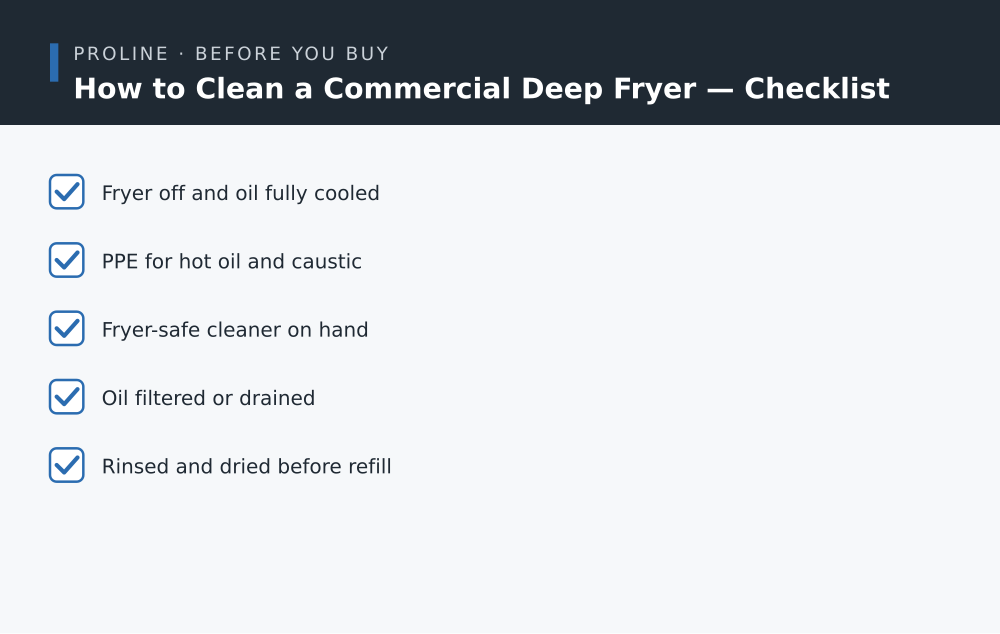
Because it involves hot oil and caustic cleaner, a boil-out demands preparation and respect. First, turn the fryer off and let the oil cool to a safe temperature before draining — draining hot oil is one of the most dangerous things done in a kitchen. Wear appropriate protective equipment: heat-resistant gloves and eye protection for the oil, and chemical-resistant gloves and eye protection for the caustic cleaner during the boil-out. Use a cleaner specifically made for fryers, never an improvised substitute, and keep it away from skin and eyes. Have a plan for the used oil — a designated container or a nearby drain if the fryer is plumbed for it. And make sure the tank is completely rinsed and dried before refilling, because any water left behind will spatter violently when it meets hot oil. The checklist above captures these preparations, which turn a routine task into a safe one.
Step by step
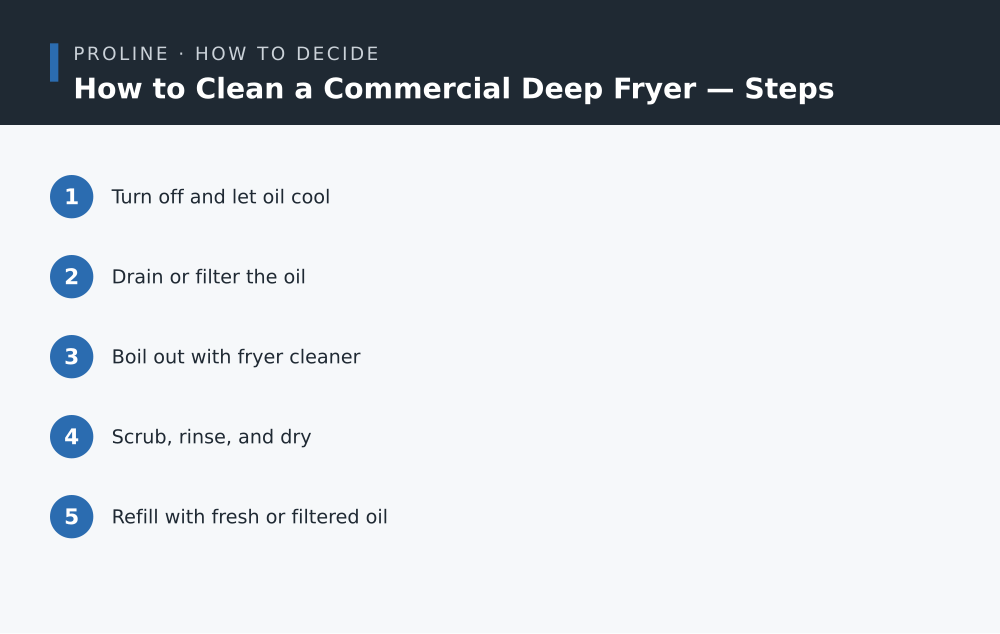
With the oil cool and the area prepared, a boil-out follows a clear sequence. First, turn the fryer off and let the oil cool to a safe handling temperature. Second, drain the oil into a proper container, or filter it back if it is still good. Third, fill the tank with water and the correct dose of fryer-safe cleaner and bring it up to the boil-out temperature so the solution loosens cooked-on residue. Fourth, scrub the tank, elements or burner area, and any removable parts, then drain the solution and rinse thoroughly until no cleaner remains. Fifth, dry the tank completely and refill with fresh or filtered oil. Work through those five steps and the fryer comes back clean, safe, and ready for service — and the oil that goes back in lasts as it should because it is starting from a clean tank.
Common mistakes to avoid
A few mistakes recur. The first, and most dangerous, is draining or handling oil while it is still hot — always let it cool first. The second is skipping protective equipment during a boil-out, when caustic cleaner and hot water are both hazards. The third is relying on occasional boil-outs while neglecting the daily skimming and filtering that actually keep oil clean, which shortens oil life and taints food. The fourth is refilling the tank before it is fully dry, so trapped water spatters violently when it meets hot oil. The fifth is using the wrong cleaner — an improvised degreaser instead of a fryer-safe product — which can leave residue that contaminates the next batch of oil. None of these are exotic; they come from rushing a task that rewards patience, or from treating a periodic deep clean as a substitute for the small daily habits that do most of the work.
Related equipment
Keeping a fryer clean is easier with the right unit; these pages cover a representative fryer and the category:
- Floor-Standing Gas Fryer
- Commercial Deep Fryers
Cleaning a fryer well is mostly a matter of rhythm: small daily habits that keep oil clean, and a proper boil-out on schedule to reach what they cannot. Respect the safety steps around hot oil and caustic cleaner, keep the tank dry before refilling, and the fryer will stay safe, turn out consistent food, and get the most life from every batch of oil. Kept on that rhythm, the fryer becomes one of the lower-maintenance pieces on the line rather than a recurring problem, and its oil cost stays predictable.