Outfitting a small café means building a working kitchen into a compact back-of-house, on a normal building’s electrical service, without buying more equipment than a focused menu needs. Every piece competes for limited space, so the list has to be built deliberately around the menu rather than copied from a larger restaurant. This guide walks through how to start from the menu and the space, what equipment tends to fill each zone of a café kitchen, which items are genuinely must-haves versus additions for later, and the permitting and utility realities that shape the build. The goal is a lean list that serves the café’s peak rush reliably and passes inspection. Getting the list right matters because a café’s kitchen is small and its margins are thin, so equipment that does not fit the menu or the space is money that could have gone toward the pieces that actually serve customers. Planning the list carefully up front — around the menu, the peak rush, and the building’s real service — is far cheaper than reworking a cramped back-of-house once the café is open and busy.
Start with your menu and space
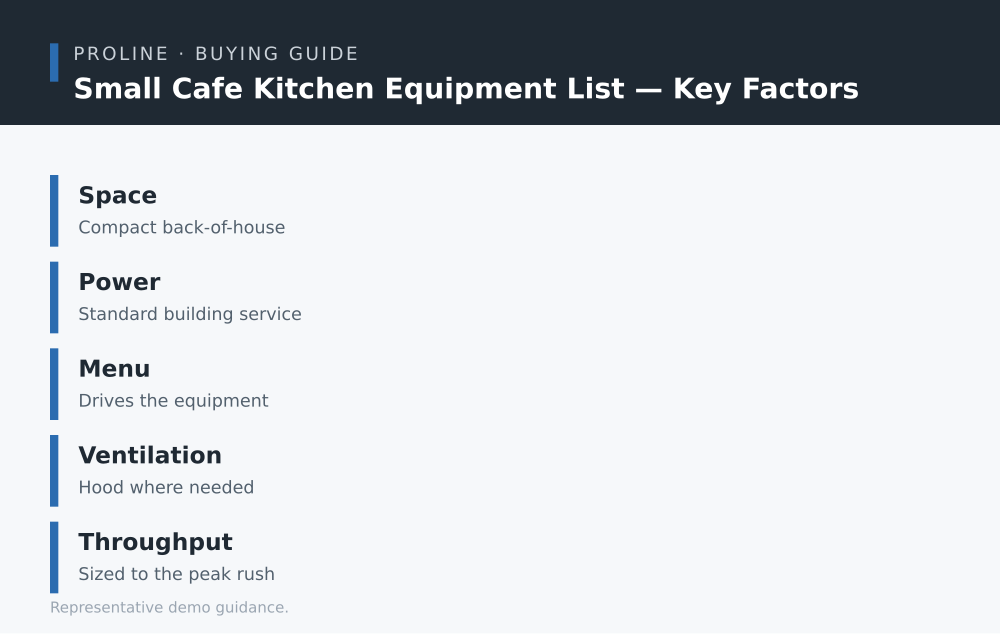
Every good equipment list starts with the menu, not a catalog. Write down every item you plan to serve and the equipment each one truly requires; a focused café menu keeps the list short and the kitchen workable. Then map that against the space you have, which in a café is usually a compact back-of-house behind a service counter. Each piece has to earn its footprint, and multi-use equipment — a griddle that also flat-sears, a convection oven that both bakes and reheats — pays for itself. Power is usually less of a hard cap than on a truck, since a café runs on standard building service, but it still pays to confirm the electrical panel can carry the cooking and beverage equipment together. Throughput matters as much as capacity: size the kitchen to the peak rush, because a café that keeps up midmorning but jams at the lunch peak was under-equipped. Getting the menu and these constraints straight first prevents buying equipment the café does not need.
Equipment by zone
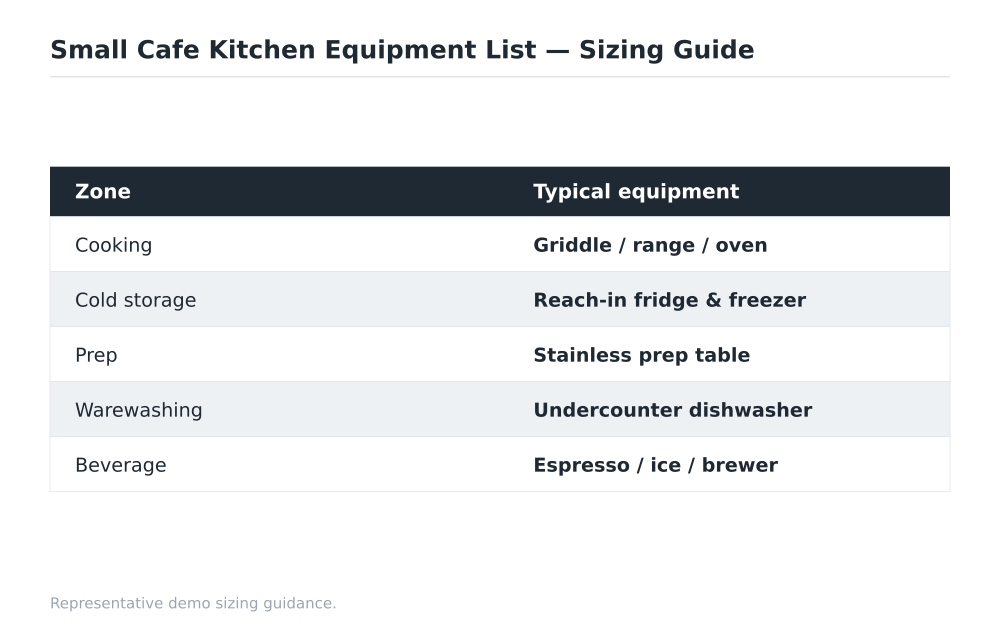
It helps to think of a café kitchen in zones and to place one workable piece in each. The cooking zone is usually a griddle, a compact range, or a convection oven chosen tightly around the menu — many cafés lean on an oven for baking and reheating more than on a full cook line. Cold storage is typically a reach-in refrigerator and freezer sized to hold a day of prep. A stainless prep table gives a real work surface for portioning and plating. Warewashing in a café is often an undercounter dishwasher that keeps clean dishware within reach of the counter. And the beverage zone — espresso machine, brewer, ice — is central to a café in a way it is not in a restaurant. The table above lays out these zones and the equipment that commonly fills them; the discipline is to cover each zone rather than over-invest in one.
Must-haves vs add-later
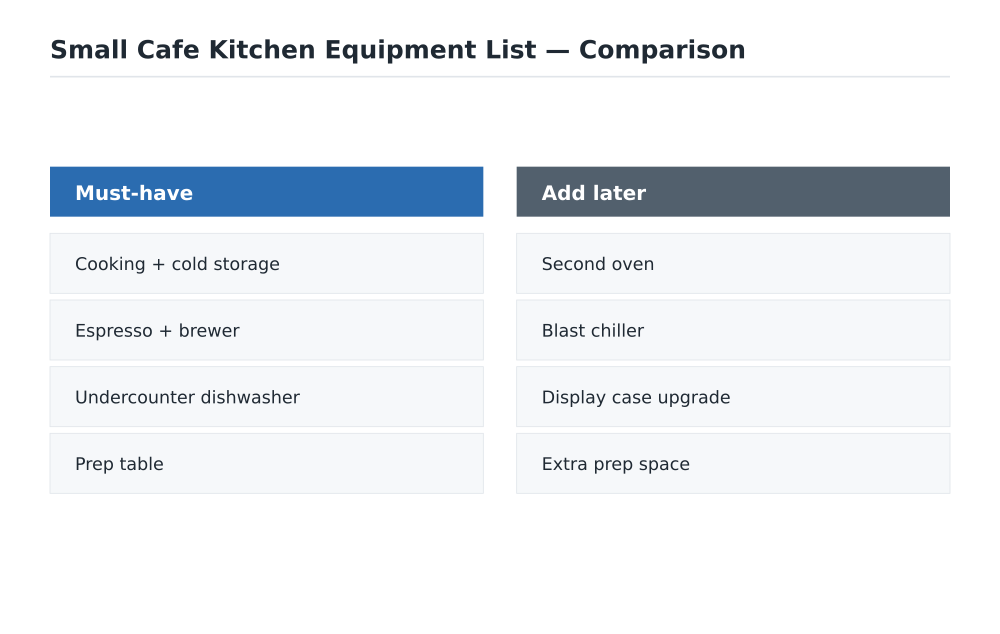
With a modest budget and limited space, separating must-haves from nice-to-haves keeps a build affordable and legal. The genuine must-haves are the cooking and cold-storage equipment the menu requires, the beverage equipment a café is built around, warewashing that code demands, and a prep surface to work on. Those let the café open and serve. Almost everything else — a second oven, a blast chiller, a display-case upgrade, extra prep space — can be added once the café is earning. The comparison above splits the list this way so a first build stays focused on what is required to serve the menu and pass inspection. It is far better to open with a lean, compliant kitchen and expand as revenue allows than to overspend on extras and come up short on a required piece at inspection.
Permitting, power, and ventilation
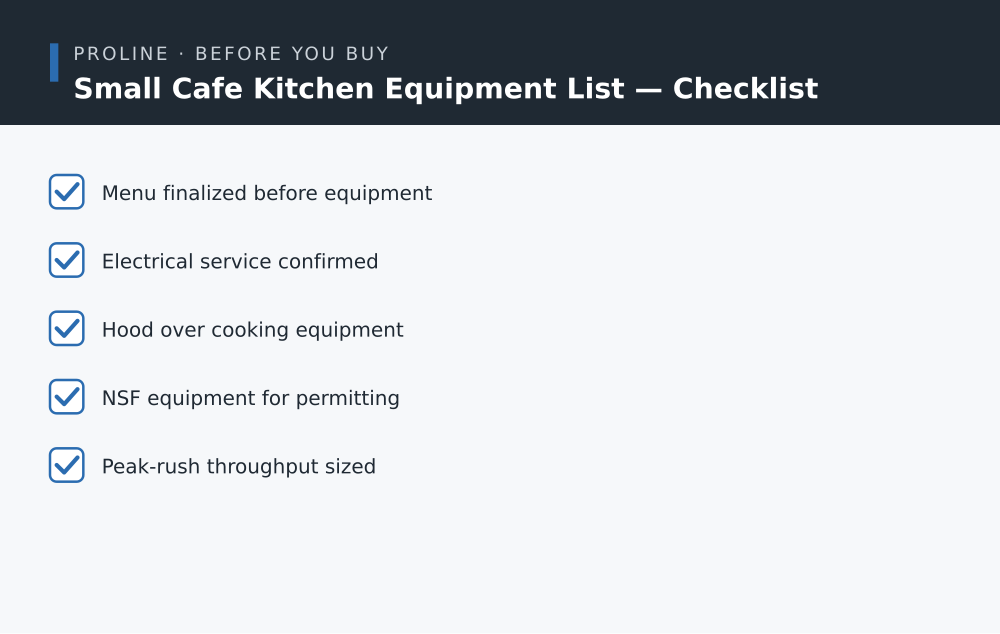
A café kitchen has to satisfy code as well as the barista and cook. Equipment should be NSF-rated so it passes health permitting, and any cooking equipment that produces grease or heat needs a hood sized to it — a café doing real cooking cannot skip ventilation, though a beverage-only counter may need less. Confirm the building’s electrical service can carry the cooking and beverage equipment running together, especially espresso machines and ovens, which draw heavily. Plumbing for the dishwasher, handwashing, and beverage equipment all have code requirements that vary by jurisdiction. The checklist above captures the items worth confirming before buying, because discovering a permitting or electrical gap after the kitchen is built is expensive and slow to fix, and can delay an opening.
How to build the list
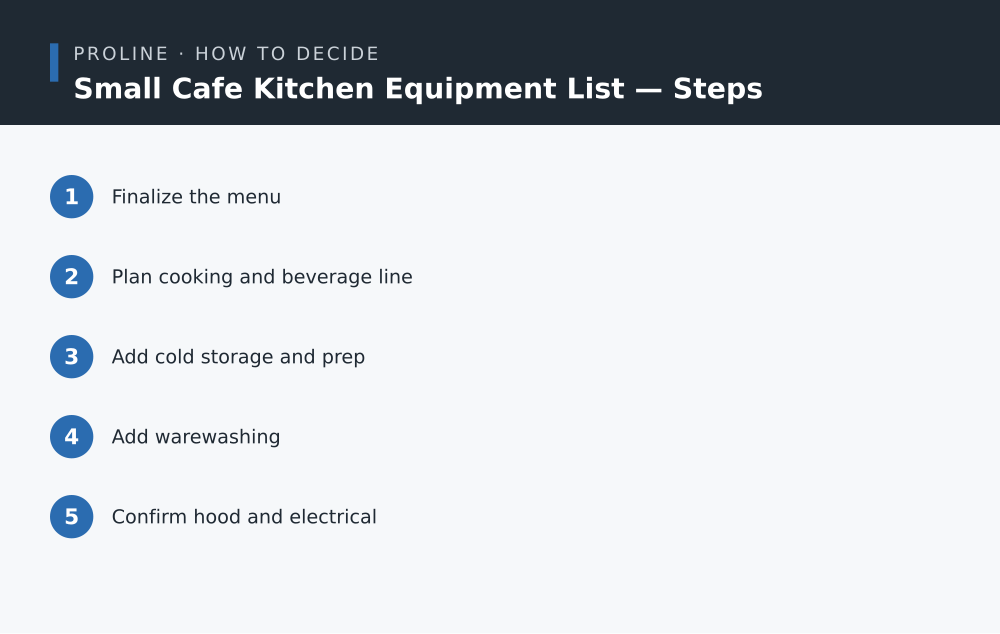
A simple sequence turns all of this into an actual list. First, finalize the menu, since everything downstream depends on it. Second, plan the cooking and beverage line together, choosing the fewest, most multi-use pieces that serve the menu. Third, add cold storage and a prep surface sized to a day of service. Fourth, add warewashing that fits the space and keeps clean dishware near the counter. Fifth, confirm the hood and electrical service cover the equipment running at the peak rush. Work through those five steps and you end up with a lean, code-aware list built around the menu and the café’s real limits, rather than a wish list that will not fit or pass. Then look at what to add later once the café is running.
Common mistakes to avoid
A few mistakes recur on café builds. The first is starting from equipment instead of the menu, which leads to buying pieces the menu does not need. The second is under-sizing for the peak rush: a kitchen that keeps up midmorning but jams at the lunch peak frustrates staff and loses sales. The third is overlooking the electrical load of beverage equipment — espresso machines and ovens draw heavily, and running them together can trip an under-provisioned panel. The fourth is treating ventilation as optional for a café that actually cooks, then failing inspection over a missing hood. The fifth is over-buying for day one, spending the budget on a second oven or a display upgrade before the core kitchen is even complete. None of these are exotic; they come from copying a larger restaurant instead of respecting the menu, the peak rush, and the code a café kitchen has to meet.
Related equipment
As you spec the build, these pages cover a common café cooking piece and the prep-equipment category:
- Single-Deck Convection Oven
- Commercial Food-Prep Equipment
A good café equipment list is lean, menu-driven, and built to pass inspection — not a shrunken restaurant. Start from the menu, size to the peak rush, cover the beverage and warewashing the café needs, and leave the extras for once it is earning. Build the list in that order and the café opens with a kitchen that serves its menu and clears its permits. Done in that order, the build stays lean, legal, and matched to the menu, which is exactly what a small café needs to open on budget and serve its peak rush well. And because a café grows into its space, it helps to leave a little room in the plan for the one or two additions that revenue will justify first, so the kitchen can expand along an obvious path rather than being torn up and re-laid the first time the menu grows.